








BANER - The Mint, Shop No. 103, 1st Floor, Opp. Kapil Mallhar Society, Tokyo Bakery, Baner, Pune, Maharashtra - 411045


Baner Clinic
Hearing Aids Centre in Baner, Pune
You do not wake up one day with hearing loss. That is not how it works. It creeps in slowly. First, you notice that restaurants feel harder than they used to. The clatter of plates and the hum of other conversations seem to swallow up the voice of the person sitting across from you. Then you realize you have been saying "what?" more often. Not a lot. Just enough to notice.
At Aanvii Hearing, our Hearing Aids Centre in Baner, Pune does not jump to conclusions. If you are looking for the best audiologist in Baner, do not expect someone who pushes a device on you during the first visit. The idea is not just to provide a hearing machine. It is to explain what exactly is happening with your hearing and how that connects to your daily struggles.
A lot of folks do not think about this. Hearing is not just about volume. It is about clarity. And clarity depends on which frequencies your ears are struggling with.
Hearing Loss and Frequencies: What You Are Actually Missing
Hearing loss is not only about how loud a sound needs to be before you can hear it. It is also about which frequency range is affected. This is what trips people up the most.
Low frequency sounds, usually between 250 to 500 Hz, include deeper tones like the rumble of traffic, the hum of an air conditioner, or vowel sounds in speech. These are often heard clearly even when hearing loss begins. People rarely struggle with low frequencies first.
Mid frequencies, around 500 to 2000 Hz, are where most speech lives. This range carries the structure of words. If there is a drop here, you will notice it immediately. Conversations start sounding muddy or unclear, even if the volume feels normal.
High frequencies, between 2000 to 8000 Hz, carry sharper sounds like "s," "t," "f," and "sh." These are essential for understanding speech clearly. When this range is affected, people often say the exact same thing. "I can hear someone speaking, but I cannot understand what they are saying."
In most cases, hearing loss starts in the high frequency range. This is common with ageing, long term noise exposure from earphones or traffic, or even genetics. That is why speech starts sounding unclear even when overall volume feels perfectly fine.
An audiologist reads your hearing pattern based on these frequencies and explains how it connects to your daily experience. It is not just about how much you hear. It is about what specific sounds you are missing.
How Digital Hearing Aids Work in Real Life Situations
A hearing aid does more than just increase sound. It processes sound in a way that matches your unique hearing loss pattern.
Let me break down what actually happens inside.
It starts with a small microphone that grabs all the sounds near you. Those sounds get sent to a small computer chip inside the hearing aid. That chip analyzes the sound in real time. It asks itself a simple question. Which parts of this sound need a boost? Which parts are just noise?
Based on your hearing test results, the chip boosts only the frequencies you struggle with. If your high frequencies are weak, it leaves the low and mid frequencies alone. That is the key difference between old analog devices and modern digital hearing aids.
After processing, the clean sound is delivered through a receiver into your ear. Modern digital hearing aids also adapt continuously without you having to do anything. With Integrated Xperience (IX) technology, the device adjusts dynamically when multiple people are speaking at the same time. It helps maintain clarity without constant manual changes. You do not have to fiddle with buttons or apps every time you walk into a different room. Latest Hearing aids also have Bluetooth, Real time conversation enhancement, Telecoil Technology, etc
This is why the experience feels more natural compared to older devices. Your friend talking and the fan spinning in the corner do not both get louder.
Which Hearing Machine Suits Different Levels of Hearing Loss
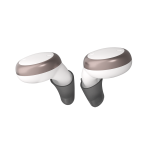
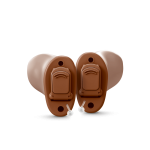
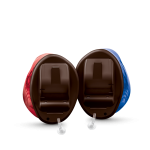
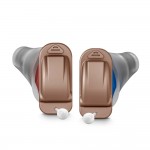
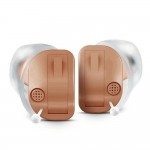
Choosing the right hearing machine depends on how much hearing loss is present and how much amplification is required. For mild to moderate hearing loss, smaller and more discreet options are usually suitable. IIC (Invisible in Canal) devices work well up to around 45 to 50 decibels. They offer minimal visibility while handling early stage loss. Most people will not even know you are wearing one.
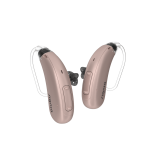
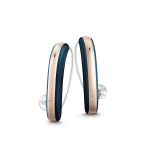
CIC (Completely in Canal) devices support up to around 50 decibels. These give you a little extra power without being obvious. If your loss falls in the moderate range and you need better clarity, ITC or In the Canal models work well up to roughly 55 decibels. For moderate to moderately severe hearing loss, where stronger amplification is needed, ITE (In the Ear) or BTE (Behind the Ear) type devices can support up to around 65 decibels or more. These are more suitable for higher levels of hearing difficulty.
The choice is not only based on these numbers. Comfort, lifestyle, and daily listening environments also matter. Someone who attends meetings or goes out to dinner often needs different features than someone who mostly stays at home in quiet settings. An audiologist usually helps match the device to both your hearing level and your daily routine.
Free Hearing Test, Free Hearing Aids Trial, and Home Visit: Getting Clarity Before You Decide
Most people are unsure whether they actually need a hearing aid or not. That uncertainty is completely normal. No one wants to spend money on something that might not work for them.
That is why the process at our Baner centre starts with clarity, not pressure.
We begin with a Free Hearing Test using Pure Tone Audiometry (PTA). It is a hearing test in which you are made to sit in a room wearing headsets, Then sounds of different frequencies and decibels are blasted through the headphone, all u have to do is react if you hear the sound. This Hearing Test produces an audiogram , which is then explained to you by our expert audiologist in easy terms.
But testing alone is never enough. A graph on paper cannot tell you how a device will perform in your own kitchen or inside a moving car.
That is why we also offer a Free Hearing Aid Trial. You take a programmed device home. You wear it while making morning coffee. You wear it while talking to your family. You wear it while stepping out to a busy market in Baner or sitting in a noisy restaurant. This trial period lets you test comfort and sound quality in your real world before you spend any money. No charge for the trial period. No awkward "so are you buying it?" conversations.
For those who cannot easily travel to our clinic, we also provide home visits. This works well for older adults or anyone who finds it hard to get out of the house. Our audiologist can come to your place for evaluations, fittings, or small adjustments.
After you have used the device and feel sure it works for you, we have payment plans including zero percent EMI. The goal is to remove every possible barrier between you and better hearing. We also provide a Secure Hearing Plan which is an Insurance/ protection on premium devices against accidental damage, theft, fire damage for 12 months from date of purchase.
Visit Aanvii Hearing Clinic in Baner
If hearing has started feeling slightly different, it is better to check it early rather than adjusting to it over time. The longer you wait, the more your brain gets used to working with incomplete sound. That makes the adjustment harder later.
At Aanvii Hearing Aids Center in Baner, you can get a Free Hearing Test with PTA, try a device through a Free Hearing Aid Trial, and speak with the best audiologist in Baner who will explain everything in plain language. With free tests, home visits, free trials, and easy EMI plans, take the first step and schedule an appointment.
Book a FREE Hearing Aid Trial Now!
| Clinic | |
| State | Maharashtra |
| City | Pune |
| Email @ | baner@aanviihearing.com |
| Contact | 074988 02990 |
- Stock: In Stock
- Model: BANER
- MPN: +917498802990


